Commercial Roof Maintenance: A Practical Guide for Property Managers
For property managers, the roof is one of the largest assets under your care—and one of the most expensive to replace prematurely. A structured maintenance program extends membrane life, reduces surprise leaks, and helps you plan capital expenditures.
Schedule regular inspections
Commercial roofs should be inspected at least twice a year, ideally spring and fall, and after major storms. Inspections catch seam, penetration, and drainage issues before they cause interior damage.
Document each inspection with photos and a condition report to track the roof over time.
Maintain drainage
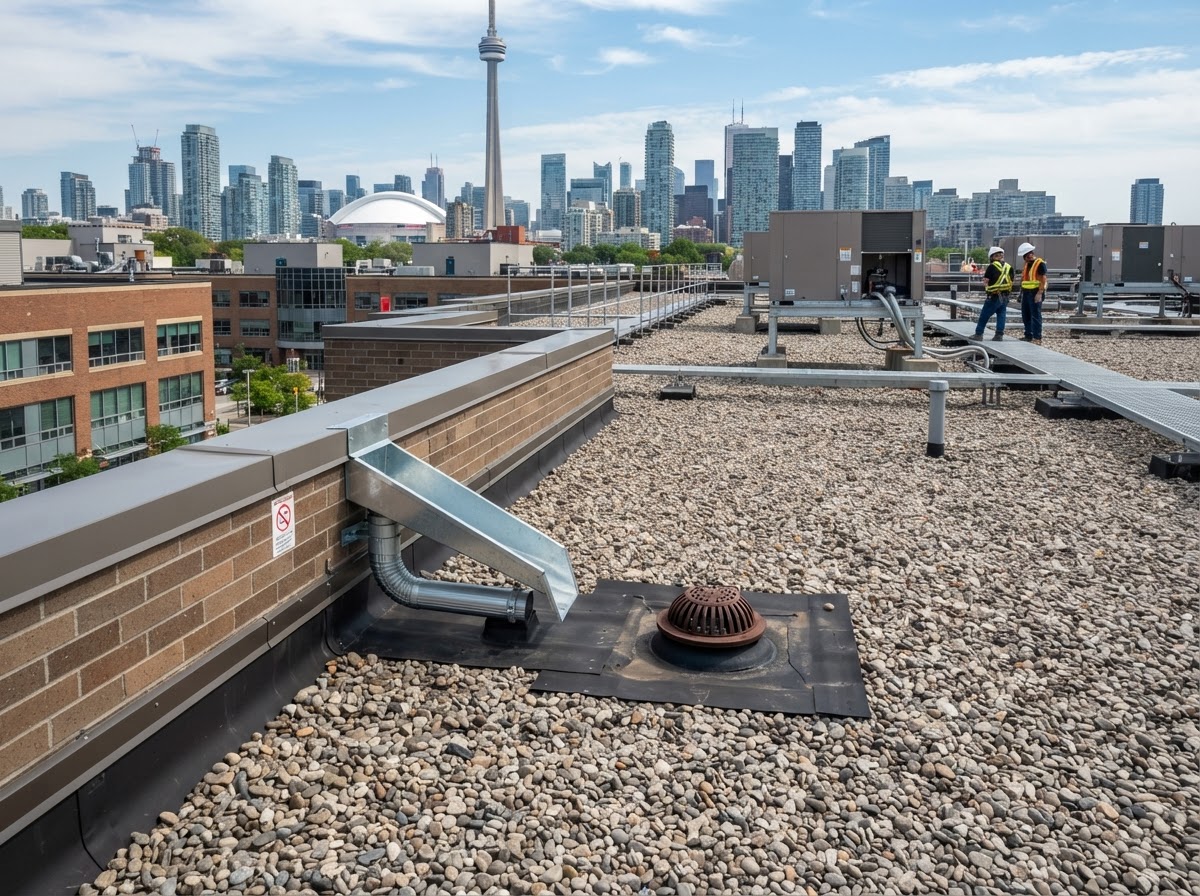
Flat commercial roofs fail most often at drains and scuppers. Keep drains clear of debris, verify water flows freely, and address ponding promptly.
Ponding water longer than 48 hours degrades membranes and signals drainage failure.
Address small repairs promptly
Small seam splits, blister patches, and penetration sealant failures are inexpensive to repair if caught early. Left alone, they become interior damage and premature replacement.
Build a relationship with a roofing contractor who responds quickly to commercial service calls.
Plan for replacement
Track roof condition over years so you can plan replacement on your timeline, not an emergency's. A maintenance record supports capital planning and warranty claims.
When replacement nears, get written scopes and coordinate around tenant operations.
Related Services
Service Locations
Frequently Asked Questions
How often should a commercial roof be inspected?
At least twice a year, plus after major storms. Regular inspection extends membrane life and catches issues early.
Does maintenance really extend commercial roof life?
Yes. Neglect is the most common cause of premature commercial roof failure. Scheduled maintenance significantly extends service life.
Have a roofing question?
Our Toronto team answers roofing questions and provides written estimates across the GTA.