Skylight Leaks: Common Causes and Repair Considerations
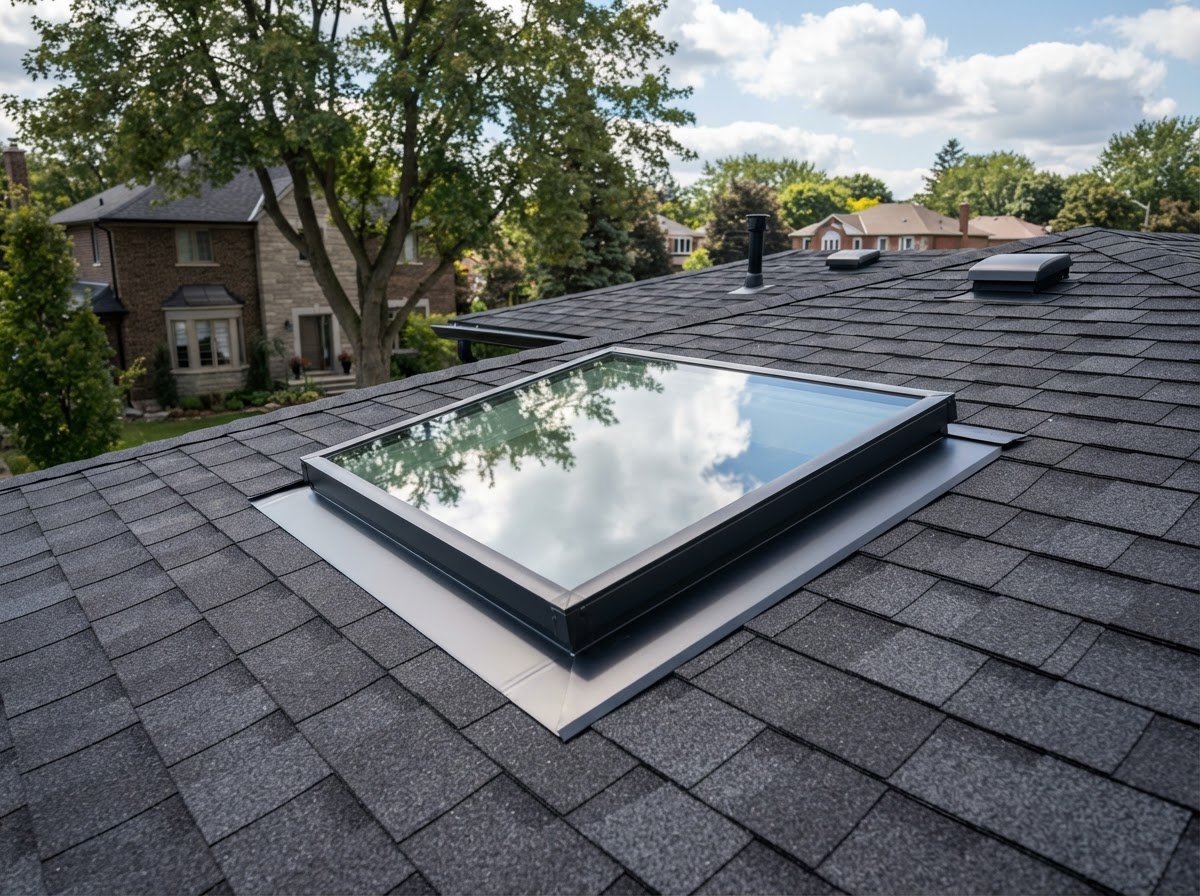
Skylights add light and ventilation but are a frequent source of leaks. The good news is that most skylight leaks trace to flashing, not the skylight itself—and flashing can often be repaired without replacing the unit.
Flashing failures are the most common cause
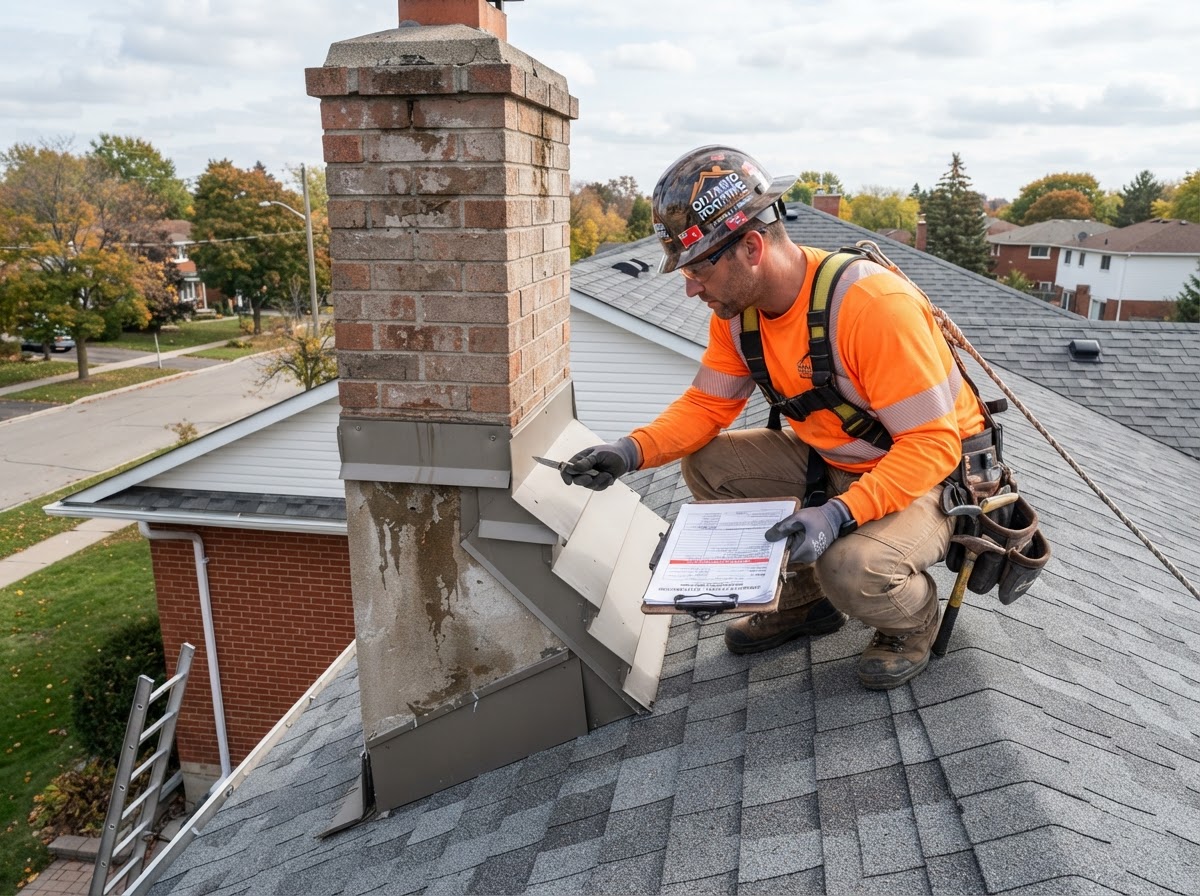
The curb and step flashing around a skylight seals the gap between the skylight and the roof. When flashing corrodes, sealants dry out, or flashing lifts, water enters around the skylight—even though the skylight itself is fine.
Flashing repair is usually far less expensive than skylight replacement.
Condensation vs. leaks
Not all water around a skylight is a roof leak. Condensation forms on the glass when indoor humidity meets cold glass, especially in winter. Condensation is a humidity and insulation issue, not a flashing failure.
Diagnosing the true source prevents unnecessary repairs.
Aged seals and gaskets
Older skylights have gaskets and seals that degrade over time. If the skylight itself is leaking (not the flashing), seal or gasket replacement may be needed—or full replacement if the unit has failed.
An inspection determines whether repair or replacement is right.
When to replace a skylight
Replacement makes sense when the unit is aged, the frame is rotted, or the curb is failing. Modern skylights with proper flashing kits are more reliable than older units.
Replacement is also a good time to upgrade to an energy-efficient, vented model.
Related Services
Service Locations
Frequently Asked Questions
How do I know if my skylight is leaking or it's condensation?
Condensation forms on the glass from indoor humidity; leaks trace to flashing. An inspection diagnoses the true source.
Can a skylight leak be repaired without replacing the skylight?
Often yes, if the leak is flashing. We replace the skylight only when the unit itself has failed.
Have a roofing question?
Our Toronto team answers roofing questions and provides written estimates across the GTA.