Roof Ventilation Explained: Why Attic Airflow Matters
Attic ventilation is one of the most important—and most overlooked—parts of a healthy roof. Proper airflow extends shingle life, prevents ice dams, reduces moisture damage, and can lower cooling costs.
How attic ventilation works
Good ventilation uses balanced intake vents (usually soffit) at the bottom of the roof and exhaust vents (ridge or static) near the top. Cool air enters at the soffit, warms as it rises, and exits at the ridge, carrying moisture and heat with it.
This continuous airflow keeps the attic close to outdoor temperature and humidity.
Why poor ventilation shortens roof life
A hot, humid attic bakes shingles from below, causing curling, cracking, and premature granule loss. In winter, a warm attic melts snow that refreezes at the eaves, forming ice dams that force water under shingles.
Moisture buildup also leads to mold and rots the roof deck.
Signs of poor ventilation
Curling shingles, ice dams in winter, excessive attic heat in summer, and moisture stains on the underside of the deck are all signs of poor ventilation.
An inspection can assess intake and exhaust balance and recommend improvements.
Fixing ventilation during replacement
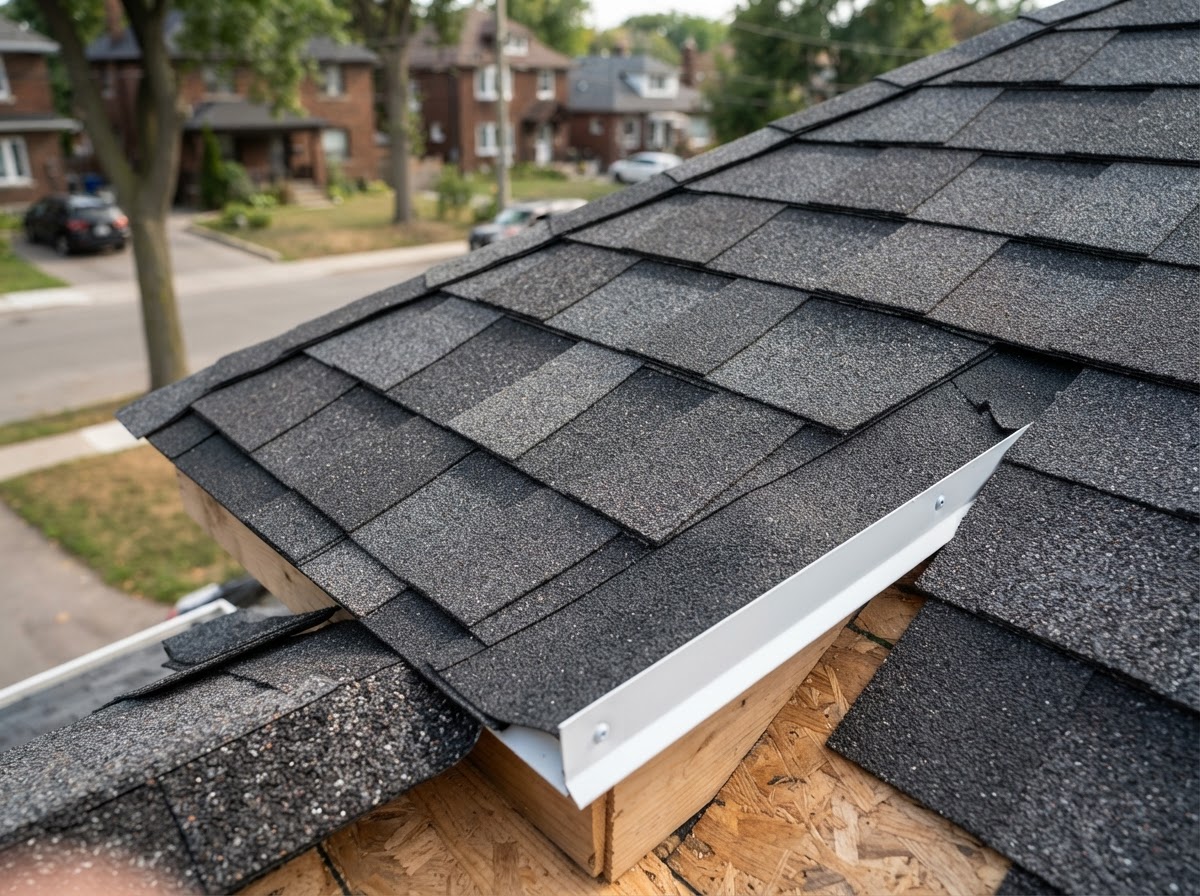
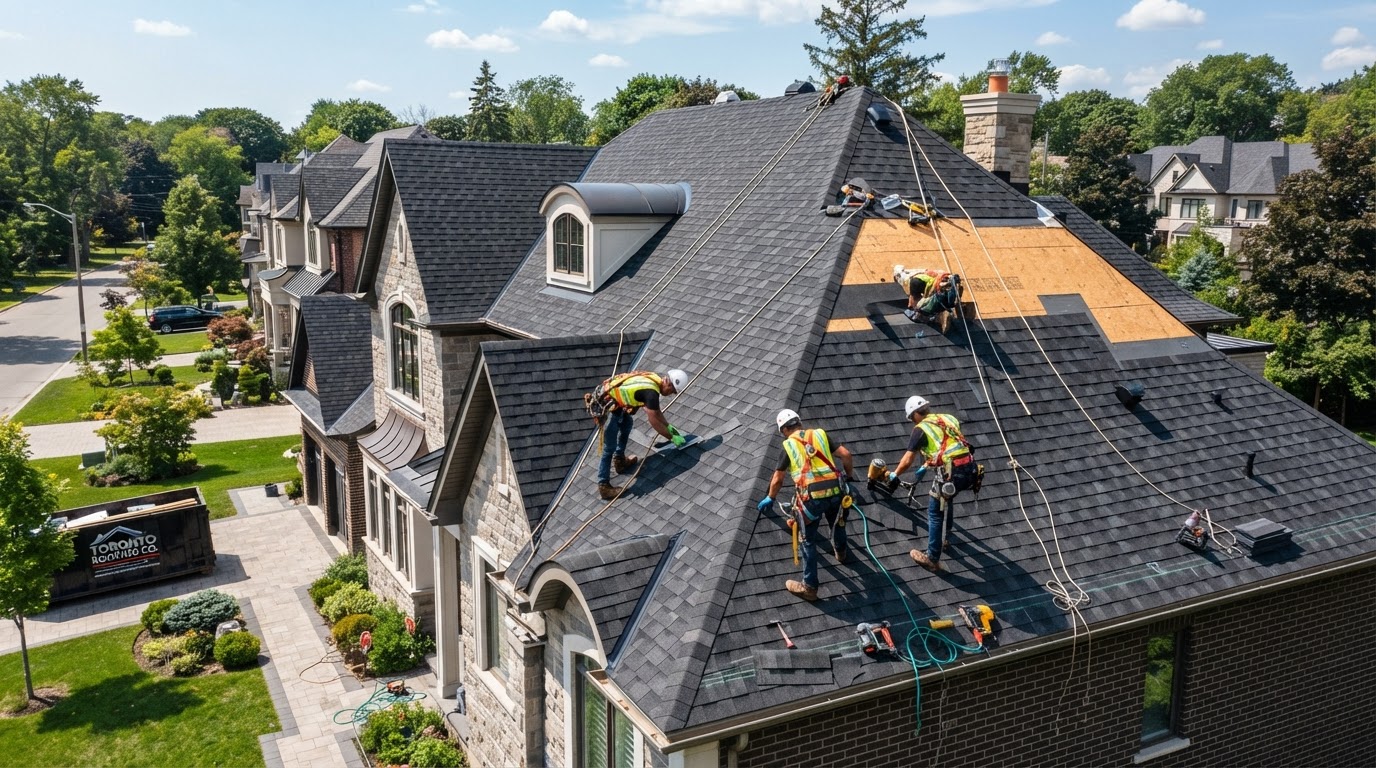
The best time to improve ventilation is during a roof replacement, when the deck is exposed. Adding ridge vents and soffit baffles is straightforward and pays off in longer shingle life and lower energy costs.
We balance intake and exhaust on every replacement.
Related Services
Service Locations
Frequently Asked Questions
How much ventilation does my attic need?
Ventilation is sized to attic area and balanced between intake and exhaust. An inspection determines what your attic needs.
Can I add ventilation without replacing my roof?
Yes. Ridge vents and soffit baffles can often be added to existing roofs to improve airflow.
Have a roofing question?
Our Toronto team answers roofing questions and provides written estimates across the GTA.